The dressing change
Fragile skin. Fewer dressing changes.
In long term care, the dressing change is often the hardest part of the day, for the resident and for the nurse. Fragile skin, heavy exudate and limited nursing hours make wound care harder than it needs to be.
Those challenging dressing changes are too often made worse by dressings that stick to the wound or saturate far too quickly. Torn skin. Damaging new tissue. Maceration. All making a difficult dressing change even worse.
We invite you to see how XLTA® eases the burden of dressing changes, minimizes the risk of torn skin and damaging fragile new wound beds, and creates a better patient experience.
CNF | Samples Request
Assess XLTA® on the wounds you are managing now. No cost, no commitment.
We reply within two business days.
What changes on the floor
Three things XLTA® is built to do differently.
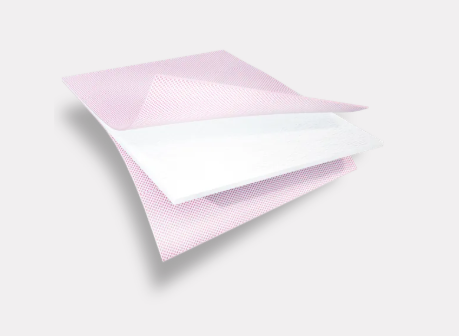
It comes away without taking the skin with it
Non-adherent layers on both faces, so orientation does not matter and neither side binds to fragile tissue.
One line covers the whole building
Three weights and seven sizes, trimmed to sacral, heel and irregular wounds without adding another vendor.
Nothing to reconcile against other therapies
Unmedicated and mechanical, with no active ingredient to weigh against a resident’s existing medication list.
Mechanism
Why the wound bed stays intact.
Exudate is drawn up out of the wound, moved sideways through the fibre network, and held there. A physical process, not a chemical one.
Hydrocapillary flow
Draws exudate up and away from the wound surface, so fluid is not sitting against tissue.
Horizontal dispersion
Spreads it laterally through the fibre matrix instead of pooling at the point of uptake.
Electrostatic sequestration
Charged fibres attract and hold bacteria, cytokines and MMPs inside the dressing.
Nursing hours
Every change you do not have to do is time back on the floor.
XLTA® handles up to nine times its own weight in fluid, which supports longer wear time between changes. Wear time is set by saturation and provider direction, not by the clock, but the arithmetic of fewer changes is worth seeing.
XLTA® is suitable for daily to three day wear with proper clinical guidance. Actual change frequency depends on exudate volume, wound condition and provider direction. The figures above are the arithmetic of that range, not a claim about any individual resident.
- It lifts away instead of pulling. Non-adherent layers on both sides, which matters on skin that tears easily.
- One product covers the building. Trims to any shape, so sacral, heel and irregular wounds come off the same line.
- Nothing to reconcile. Unmedicated, with no active ingredient to weigh against a resident’s other therapies.
- Three weights, seven sizes. Light through heavy exudate without adding another vendor.
In practice
Shaped to the wound, not the box.
Cut with scissors to match the anatomy in front of you, including cavity shapes for sacral and heel wounds and teardrop shapes between toes.

Facial mask
Facial wounds

Joint shapes
Elbows and knees
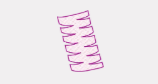
Zig zag
Limbs and curves

XHeart, oval
Cavities, amputations

Teardrop
Between digits
Application
- Clean. Saline or an appropriate solution, aseptic technique.
- Apply. Cut to the wound and extend roughly two inches beyond the periwound. Either face down. Layer for heavy exudate.
- Cover. Any standard secondary dressing. The burn cohort used Melolin with a conforming bandage.
- Redress. Driven by saturation. Moisten before removal if the dressing has dried.
Formats
Every weight comes in 2″, 3″, 4″, 6×8″ and 8×8″ sheets, plus 4×39″ and 8×39″ rolls.
- Trim to fit
- Primary or secondary
- Layerable
- Daily to 3-day wear
- Unmedicated
Published results are a reason to look. Your own residents are the reason to decide.
Request samples